

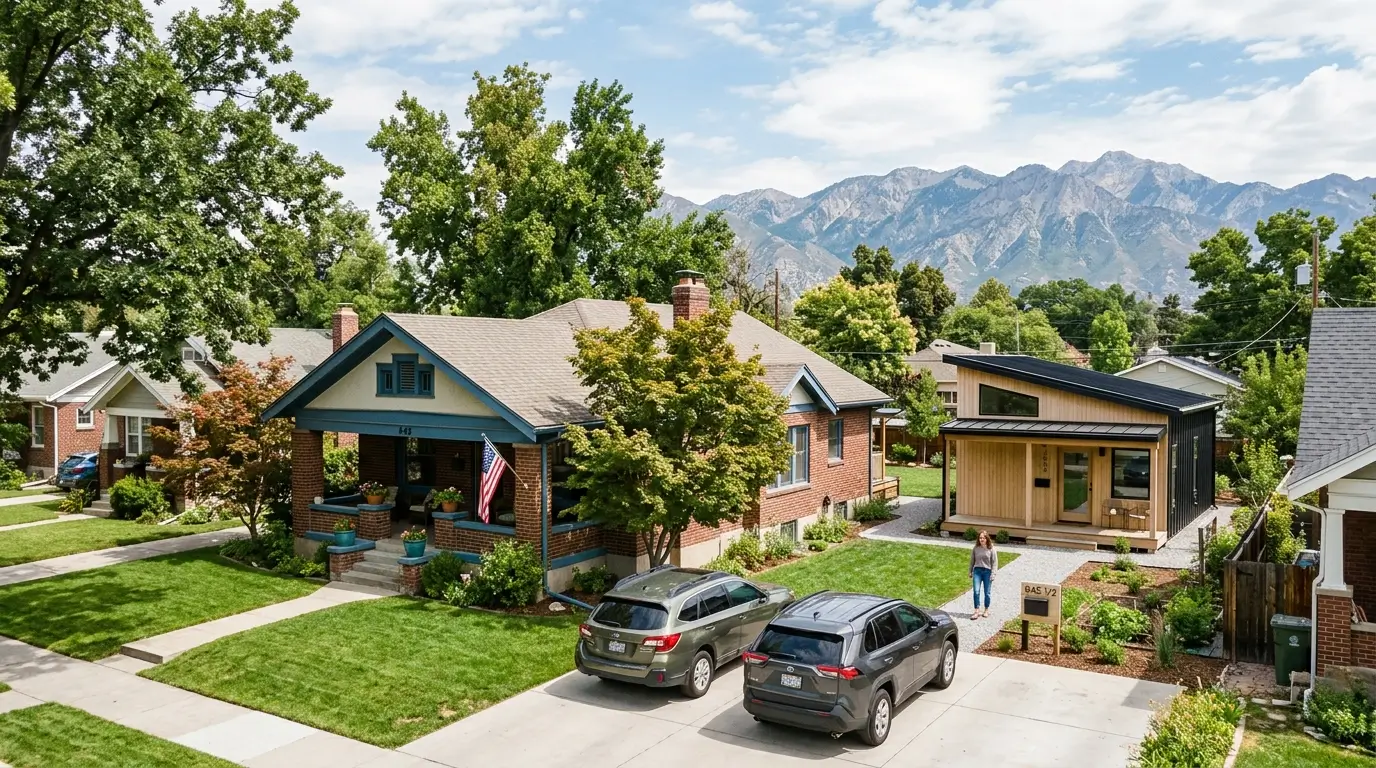
Accessory dwelling units are one of the most talked-about tools in Salt Lake City real estate right now. A basement apartment, a converted garage, or a backyard cottage can add rental income and long-term value to a property without buying a second home. It's no surprise that many owners ask us whether they can add one to a house they already rent out.
The answer depends heavily on who lives on the property. Salt Lake City has made ADUs much easier to build in recent years, but it still attaches a few important strings. Here's what owners and investors should understand before calling a contractor.
Key Takeaways
Salt Lake City allows one ADU per lot in zoning districts where residential uses are permitted.
On single-family properties, the owner or an owner's family member must live in either the main home or the ADU.
Detached ADUs are capped at 1,000 square feet or the size of the main home, whichever is smaller. Internal ADUs have no maximum size.
Renting an ADU requires a business license and enrollment in the city's Good Landlord Program.
ADUs can't be used as short-term rentals of less than 30 days in most residential zones.
What Counts as an ADU?
An accessory dwelling unit is a complete, independent living space on the same lot as a main home. It needs its own kitchen, bathroom, sleeping area, and entrance. Salt Lake City recognizes two broad categories.
Attached or internal ADUs are built within or onto the main home. Common examples include basement apartments, converted attached garages, and additions to the back of the house.
Detached ADUs are separate structures. Think backyard cottages, converted detached garages, and apartments built above a garage.
Either way, an ADU can't be sold separately from the main home. It stays part of the same property.
The Owner-Occupancy Requirement
This is the rule that matters most for rental owners. According to the city's ADU handbook, owner occupancy is required when the property is a single-family dwelling. The owner or an owner's family member has to live in either the main home or the ADU.
The city defines an owner occupant as someone listed on the recorded deed, a person related to a deed-listed owner by blood, marriage, or adoption, or the trustor of a family trust that holds title. There are limited exceptions for temporary absences of three years or less, such as military service, job assignments, or sabbaticals.
In practical terms, this means a traditional investor who owns a single-family rental and lives elsewhere generally can't add an ADU and rent out both units in Salt Lake City. That surprises a lot of owners.
Who Can Benefit From an ADU in Salt Lake City
Even with that requirement, ADUs can be a strong financial move for the right owner:
House hackers who live in the main home and rent the ADU to offset the mortgage
Owners planning a move who want to live in a smaller ADU and rent out the main house
Families where a parent, adult child, or relative lives in one unit while the other unit is rented
Owners of duplexes or multifamily buildings, where the single-family owner-occupancy rule doesn't apply in the same way
If you own rentals in suburbs like Sandy, Draper, Herriman, or Lehi, each city sets its own ADU ordinance. Many also require owner occupancy, so check local rules before you run the numbers.
Size, Height, and Placement Rules
Salt Lake City removed the conditional use requirement for detached ADUs in 2023, which means a compliant project no longer needs a special approval hearing. It still has to meet the standards in the zoning code.
Detached ADUs
Maximum size of 1,000 square feet, or the size of the main home if that's smaller
Height up to 17 feet, with taller options for pitched or flat roofs when setbacks increase
Side and rear setbacks of at least 3 feet
Accessory buildings, including the ADU, can't cover more than 50% of the rear yard in residential districts
Internal ADUs
Internal ADUs have no maximum size, but additions to the main home must follow the same setbacks and bulk rules as the house.
Parking
The city generally requires one parking space for the ADU in addition to existing parking. That requirement can be waived if the property is within a quarter mile of a transit stop or a half mile of a bike path, which covers a large share of Salt Lake City.
Permits, Costs, and Timeline
Building an ADU is a construction project, and it's subject to building codes, fire codes, and utility requirements. A licensed general contractor must pull the building permit for a second dwelling unit, and the city charges impact fees for each new unit.
Code requirements can add real cost. Separate heating systems, separate water and gas shutoffs, independent electrical panels, fire separation between units, and proper egress are all common requirements. Older Salt Lake City homes may also need sewer or water service upgrades. The city recommends meeting with Building Services early to understand these costs before you commit.
Before you start, run the project through a realistic return analysis. Our rental property ROI calculator can help you estimate whether projected rent justifies the construction budget, and our guide on how to price your rental property accurately explains how to set a market rent that keeps the unit occupied.
Renting Out Your ADU
Once the unit passes inspection and receives a certificate of occupancy, you can rent it as a long-term rental. Salt Lake City requires a business license for the rental and enrollment in the Good Landlord Program for ADU rentals on single-family properties. The program offers a significant discount on per-unit licensing fees in exchange for completing approved landlord training.
Short-term rentals with stays under 30 days are generally not permitted in the residential zones where ADUs are allowed. Plan for a traditional lease from the start.
Managing an ADU comes with a unique dynamic, especially when the owner lives a few feet away. Clear lease terms around shared spaces, parking, noise, utilities, and yard care prevent most conflicts. Many owners prefer to keep a professional between themselves and the tenant to keep boundaries clear. For broader strategy, our article on investing in homes for rent in Salt Lake City covers how ADUs fit into a long-term portfolio.
Frequently Asked Questions About ADUs in Salt Lake City
Do I have to live on the property to build an ADU in Salt Lake City?
If the property is a single-family dwelling, yes. The owner or an owner's family member must live in either the main home or the ADU, with limited exceptions for temporary absences.
How big can a detached ADU be in Salt Lake City?
A detached ADU can be up to 1,000 square feet or the size of the main home, whichever is smaller.
Can I use my ADU as an Airbnb?
Generally no. Rentals under 30 days are treated as hotel or bed and breakfast uses and aren't permitted in most residential zones where ADUs are allowed.
Can I legalize an existing unpermitted basement apartment?
Possibly. The city's Planning Division can explain whether an existing unit can be permitted and what upgrades it would need.
Making an ADU Work for Your Salt Lake City Property
An ADU can be a smart way to add income and value, but in Salt Lake City it works best for owners who live on site or have family who will. Confirm your zoning, understand the owner-occupancy rule, budget for code requirements, and plan to rent long term with the right licensing in place.
If you're adding a unit and want help with leasing, screening, and day-to-day management, we're ready to help. Learn more about our Salt Lake City property management services and how we help owners get the most from every unit on their property.