



Winter along the Wasatch Front looks great from a ski lift. From a rental owner's point of view, it can look a lot more expensive. One burst pipe in January can mean water damage, an emergency plumber at holiday rates, and a home that sits empty while repairs drag on. The good news is that most winter damage is preventable with a few weeks of planning in the fall.
At Maxfield Property Management, our motto for owners is No Surprises, and winter is where that promise gets tested. Below is the checklist we use to prepare Salt Lake City rental homes for the cold months, along with the local rules every owner should know before the first big storm rolls in.
Key Takeaways
Schedule furnace service before heating season and plan on more frequent filter changes during inversion periods.
Insulate exposed pipes, disconnect hoses, shut off exterior spigots, and blow out sprinkler lines before the first hard freeze.
Salt Lake City requires sidewalks next to your property to be cleared within 24 hours after a storm ends, so your lease should spell out who handles it.
Fall roof, gutter, and attic inspections reduce the risk of ice dams and ceiling leaks.
Tenants who know where the water shutoff is and how to report problems can stop small issues before they become big claims.
Start With the Heating System
Working heat is a basic habitability requirement for any Utah rental, and a furnace that quits during a cold snap is both an emergency repair and a tenant relations problem. A little attention in October or November goes a long way.
Schedule a Professional Furnace Inspection
Have a licensed HVAC technician inspect and service the furnace before you need it. They'll check the heat exchanger, burners, igniter, blower motor, and venting, and they can flag aging equipment while you still have time to budget for a replacement. A planned replacement in the fall almost always costs less than an emergency install on a Saturday in January.
Change Filters More Often During Inversion Season
Salt Lake Valley inversions trap cold air and pollutants near the ground for days at a time. During those stretches, furnace filters clog faster than the package suggests. We recommend checking filters monthly through the winter. Many owners include a filter change requirement in the lease or deliver filters to tenants on a set schedule so it actually gets done. If you're building out a broader seasonal routine, our property maintenance tips for landlords are a good place to start.
Test Smoke and Carbon Monoxide Detectors
Furnaces, water heaters, and fireplaces all run harder in winter, which raises the stakes for carbon monoxide safety. Test every detector, replace batteries, and swap out units that have reached the end of their service life.
Protect the Plumbing From Freezing
Frozen pipes are the most common and most costly winter claim we see. Water expands as it freezes, and a pipe that splits overnight can release a surprising amount of water before anyone notices.
Insulate Exposed and Vulnerable Pipes
Walk the property and look for pipes in crawl spaces, unheated garages, basements, and exterior walls. Foam pipe sleeves are inexpensive and easy to install. For homes with a history of freezing, heat tape on problem sections is worth the investment.
Shut Off and Drain Exterior Spigots
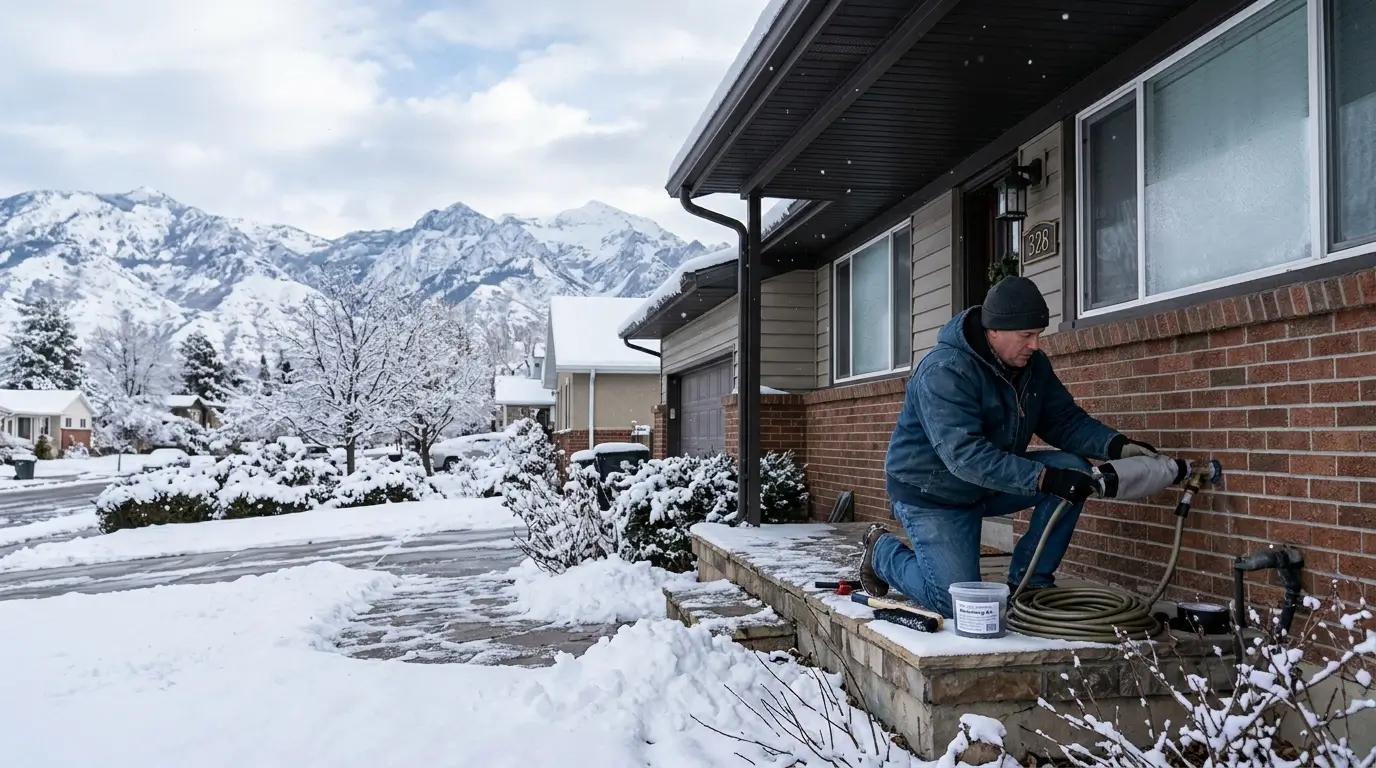
Disconnect garden hoses, shut off the interior valve that feeds each exterior spigot, and open the spigot to drain any remaining water. A hose left attached through December can trap water in the line and crack the pipe inside the wall, where the damage is harder to spot.
Blow Out the Sprinkler System
Most single-family homes along the Wasatch Front have automatic irrigation. Lines and backflow preventers need to be blown out with compressed air before overnight temperatures drop well below freezing. If the lease makes this an owner responsibility, book it early, because local irrigation companies fill their fall schedules quickly.
Set Expectations for Thermostats and Holiday Travel
Tenants often travel over the holidays and turn the heat way down to save money. Your lease or move-in packet should require a minimum thermostat setting whenever the home is unoccupied, and tenants should know to open cabinet doors under sinks on exterior walls during extreme cold.
Inspect the Roof, Gutters, and Attic
Ice dams form when heat escaping through the roof melts snow, which then refreezes at the colder eaves. The ice blocks drainage, and water backs up under the shingles and into ceilings and walls.
A fall exterior check should include clearing gutters and downspouts after the leaves drop, looking for missing or lifted shingles, checking flashing around chimneys and vents, and confirming that attic insulation and ventilation are adequate. These items fit naturally into a seasonal walkthrough, and our guide to the different types of rental property inspections explains where a preventive visit fits alongside move-in and move-out inspections.
Know Your Snow Removal Responsibilities
Snow removal is where winter maintenance becomes a legal issue. Under Salt Lake City Code 14.20.070, property owners must clear snow and ice from the sidewalk next to their property within 24 hours after a storm ends. The city requires a cleared path at least 42 inches wide, including corners and curb ramps, and citations can go to the owner, lessor, or occupant. Fines for smaller properties start at $50 per day and increase the longer the sidewalk stays uncleared.
Other cities we serve, including Sandy, Draper, West Jordan, and Lehi, set their own requirements, so check the ordinance for the city where your rental sits. Beyond fines, an icy walkway is a slip-and-fall liability risk for you as the owner.
For most single-family rentals, the lease assigns routine shoveling to the tenant. Even so, we recommend providing a shovel and ice melt at move-in, putting the 24-hour rule in writing, and deciding in advance who handles snow when the home is vacant. For multifamily properties or tenants with documented physical limitations, a snow removal vendor is usually the safer choice.
Prepare Vacant Properties for Winter
A vacant home is the highest-risk property in winter because nobody is there to notice a problem. Keep the heat on at a safe minimum, schedule regular drive-bys and interior checks, and confirm that your insurance policy's vacancy terms are being met. For longer vacancies, professional winterization of the plumbing may make sense.
The better strategy is keeping vacancy short. Our rent ready standards are designed to turn homes quickly and get them back on the market, which means fewer weeks of an empty house sitting through a freeze.
Talk With Tenants Before the First Freeze
Your tenants are the first line of defense against winter damage. Before temperatures drop, send a short winter guide that covers where the main water shutoff is located, what to do if a pipe bursts, how to submit a maintenance request, the minimum thermostat setting, and who is responsible for snow removal. A tenant who reports a slow drip or a cold room right away can save you thousands of dollars.
Frequently Asked Questions About Winterizing a Salt Lake City Rental
Who is responsible for shoveling snow at a rental property in Salt Lake City?
City code allows citations to be issued to the owner, lessor, or occupant. The lease should clearly assign snow removal, and the owner should cover it any time the home is vacant.
What thermostat setting should tenants use when they travel in winter?
Many owners require a minimum of about 55 degrees whenever the home is unoccupied. Put the exact number in the lease so expectations are clear.
When should I schedule a sprinkler blowout in Utah?
Book it in October or early November, before overnight lows settle well below freezing. Irrigation companies get busy, so earlier is better.
Should I keep the heat on in a vacant rental?
Yes. Keeping the heat on at a safe minimum protects pipes and helps you stay within your insurance policy's vacancy requirements.
A Prepared Rental Makes for a Simpler Winter
Winter in Salt Lake City doesn't have to bring surprise repair bills. Service the furnace, protect the plumbing, check the roof, put snow removal in writing, and give your tenants the information they need to act fast. Those steps protect the home, the tenant relationship, and your returns.
If you'd rather hand the whole checklist to someone else, our team takes care of seasonal maintenance, inspections, vendor scheduling, and tenant communication for owners across the Wasatch Front. Learn more about our Salt Lake City property management services and see how we keep life simple for rental owners all year long.